Have you ever held your breath as a flock of flamingos lifts off just meters away, their wings catching the light in a flash of pink? That moment-when wild creatures move freely and you’re lucky enough to witness it-is what draws so many to the Camargue. But seeing isn’t enough. To truly connect with this landscape, you need to understand it: the rhythms of its birds, the quiet patience of observation, and the delicate balance that keeps this ecosystem alive. This isn’t just sightseeing-it’s immersion.
The essential checklist for a camargue wildlife discovery
Technical gear for sharp observation
What you carry into the marshes makes all the difference. Start with a solid pair of binoculars-10x42 is ideal for spotting herons in reed beds or avocets skimming the water’s edge. A camera with a long lens helps capture distant wildlife without intrusion. Dress for blending in: neutral colors, a wide-brimmed hat, and quiet footwear. The ground is often damp, so waterproof boots are a must. And always pack water, sunscreen, and mosquito repellent-nature doesn’t pause for discomfort.
For a successful stay in the heart of nature, it is essential to book a campsite near Saintes Marie de La Mer.
Biological rhythms and best timing
The magic happens at the edges of the day. Sunrise and sunset are peak activity times for birds-flamingos feeding, egrets wading, and harriers gliding low over the marshes. These hours offer not just movement but softer light, perfect for observation and photography. Migratory patterns also shape your visit: spring brings nesting species, while autumn means flocks passing through on their journey south. But above all gear and timing, the most vital tool is patience. Wildlife reveals itself only to those who wait.
- 10x42 binoculars for clear, steady viewing
- Waterproof footwear for damp trails
- Field guide or birding app for real-time identification
- Light, neutral-colored clothing to avoid startling animals
- Water and insect repellent for comfort during long waits
Spotting the iconic species of the Natural Park
Greater Flamingos: the pink jewels of the marshes
The Camargue is one of Europe’s few breeding grounds for greater flamingos, and seeing them up close is unforgettable. These birds gather in shallow saltwater ponds, where they filter-feed with their curved beaks. Their pink hue comes from carotenoids in the algae and brine shrimp they eat-healthier flamingos show brighter plumage. While they’re often visible from public roads, the best views come from quiet observatories like those at Parc Ornithologique du Pont de Gau. Keep your distance: loud noises or sudden movements can disrupt feeding, especially during breeding season.
Camargue Horses and Bulls: semi-wild heritage
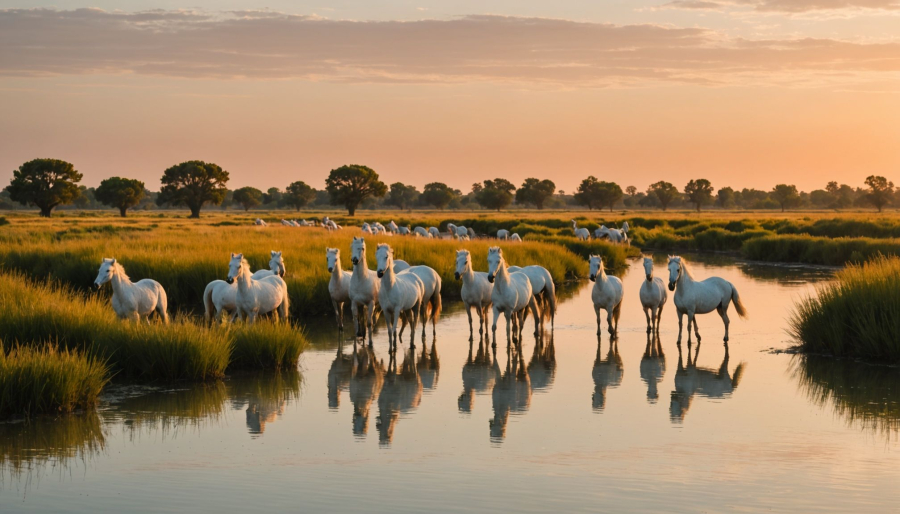
You’ll often see white Camargue horses and dark bulls grazing in open pastures, managed by the region’s gardians-the local cowboys. These animals aren’t fully wild, but they live with minimal human intervention, adapted to the delta’s harsh conditions. Horses may appear near trails, but never approach or feed them-this is their working life, not a tourist attraction. Bulls, though docile in appearance, are territorial. Always observe from a safe distance and respect fencing, which marks private land. Spotting them in motion-galloping through shallow water or standing still in the heat-feels like witnessing a living postcard of the region’s heritage.
Choosing the right observation spots near Arles
The Camargue’s diversity lies in its landscapes: vast sansouïres (salt-tolerant grasslands), reed beds, lagoons, and rice fields. Each supports different wildlife. Near Arles, public trails like those in Saliers offer quiet access to marshes where herons, bitterns, and kingfishers thrive. Unlike the busier coastal zones near Saintes-Maries-de-la-Mer, these inland paths see fewer visitors, increasing your chances of undisturbed sightings. Look for subtle signs: ripples in water, sudden bird flight, or hoofprints in soft mud. These clues often lead to hidden pockets of life. Some observatories are wheelchair-accessible, and many trails are flat and well-marked, making them suitable for families. The key is knowing where to go-and when. Early mornings bring the most activity, and midday heat often sends animals into shade.
Comparing guided tours versus solo exploration
Deciding how to explore depends on your experience and goals. Guided tours offer access to restricted areas and expert insights you won’t find in guidebooks. But solo exploration allows for personal rhythm and quiet contemplation. The choice isn’t always clear-cut-each approach has trade-offs.
| Approach Type | Pros | Cons | Recommended for |
|---|---|---|---|
| Guided Safari | Access to private lands, expert spotting, storytelling context | Higher cost, fixed schedule, group pace | Families, first-time visitors, photographers |
| Self-guided hiking | Flexibility, lower cost, personal rhythm | Limited access, no expert input, navigation required | Experienced birders, independent travelers |
| Ornithological park visit | Guaranteed sightings, educational displays, accessibility | Less wild, can be crowded | Children, short stays, casual visitors |
Photography ethics and wildlife conservation
Minimizing human impact on nesting grounds
Every footprint matters. The Camargue is a fragile ecosystem where species like the little tern or black-winged stilt nest directly on the ground. Straying from marked paths can destroy nests or alert predators. Drones are strictly regulated in the Regional Natural Park-flying one without permission risks fines and ecological harm. Even small actions, like leaving trash or playing loud music, disrupt animal behavior. The golden rule? Leave no trace, stay on trails, and keep noise low. Respect isn’t just polite-it’s essential.
Capturing the perfect shot without disturbance
A great photo shouldn’t come at the cost of the subject’s well-being. Use a long lens-400mm or more-to keep your distance. Never lure animals with food or calls. The best shots often come after long waits, when animals settle into natural behavior. Remember: your eyes are your first tool. Spend time just watching before raising the camera. That moment of stillness often leads to the most authentic images-and the deepest memories.
Seasonal cycles for birdwatching enthusiasts
Spring and Autumn: the migration highways
The Camargue sits on a major flyway between Africa and Europe, making it a critical stopover for migratory birds. Spring (March to May) brings species returning to breed-flamingos, avocets, and glossy ibises. Autumn (August to October) sees flocks gathering before the long journey south. These months offer the greatest diversity, with rare warblers, raptors, and waders passing through. While summer brings heat and fewer birds, it’s the best time to see young flamingos in their gray plumage before they turn pink. Winter, though quieter, still hosts thousands of ducks and geese. No matter the season, each visit reveals a different layer of the delta’s rhythm.
Practical Frequently Asked Questions
What is the typical budget for a half-day 4x4 safari?
Half-day guided safaris in the Camargue typically cost between 40 and 70 € per person. Prices vary based on group size, guide expertise, and whether the tour includes stops at private ranches or restricted wetlands. Some include binoculars and refreshments, so check details in advance.
If I cannot walk long distances, are there accessible viewpoints?
Yes, several observatories are wheelchair-accessible and located near parking areas. The Parc Ornithologique du Pont de Gau and certain trails near Saliers offer boardwalks and shaded viewing points. Driving routes through the marshes also allow wildlife spotting from your vehicle.
What should I do if I find an injured bird during my trail?
Do not touch or move the animal. Note the location and species if possible, then contact the nearest park office or wildlife rescue center. In the Camargue, the Ligue pour la Protection des Oiseaux (LPO) coordinates care for injured birds and can guide you on next steps.
Is it mandatory to stay on marked trails within the private marshes?
Yes. Many marshes are privately owned and managed for livestock or rice farming. Even if trails seem informal, straying can damage habitats or disturb animals. Trespassing on private land is prohibited, and fines apply. Always respect signage and stick to public paths.
Is early morning really much better than late afternoon for flamingos?
Both times offer good opportunities, but early morning is generally better. Cooler temperatures and softer light encourage feeding activity. Flamingos often retreat to quieter, inaccessible areas during midday heat, making late afternoon sightings less predictable.
